
Anúncios
Have you ever stopped to think if your job will still exist in the same way a decade from now? Technology is advancing at an accelerated pace, profoundly transforming the way we perform our daily tasks.
Many traditional roles are being redefined by intelligent systems and automation, generating legitimate questions about which professions may disappear in the face of so much technological innovation.
Anúncios
Today, we will explore Professions That May Disappear in the Future.
Professions That May Disappear Due to Artificial Intelligence
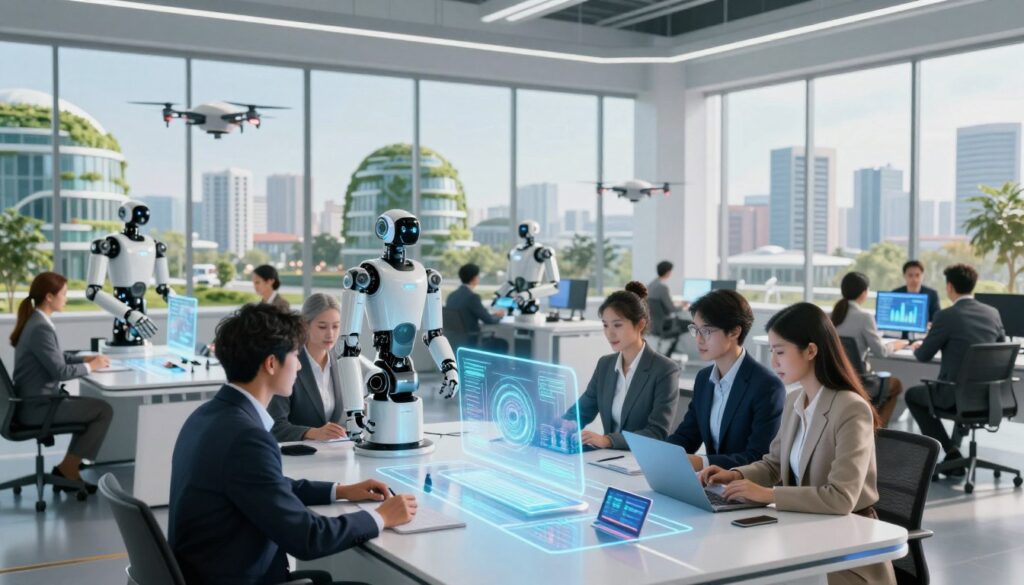
Artificial intelligence is redefining what it means to be productive in the corporate environment. With the ability to process large volumes of data with precision, this technology has taken over tasks that previously depended exclusively on human effort.
This change generates a debate about which professions may disappear in the near future.
Anúncios
The replacement of manual labor with intelligent algorithms is a growing reality, mainly focused on repetitive and predictable activities.
Telemarketing and customer service operators
The customer service sector has undergone a radical transformation with the use of advanced chatbots, managing to resolve frequently asked questions and guide users without the need for immediate human intervention.
As a result, the demand for traditional operators decreases, since artificial intelligence offers support available 24 hours a day. The efficiency in automated service makes the process faster and less costly for companies.
Data entry clerks and data entry professionals
The task of manually transcribing information is becoming obsolete. Optical character recognition and natural language processing technologies can extract data from documents with impressive speed.
Professionals who only perform data entry face a scenario of workforce replacement. Automation ensures that human errors are minimized, increasing the reliability of information stored in systems.
Accountants and routine administrative assistants
Many administrative functions, such as bank reconciliation and spreadsheet completion, are now performed by specialized software. Artificial intelligence can identify financial patterns and generate complex reports in seconds.
These Professions That May Disappear require rapid adaptation to more strategic roles. The focus of human work is shifting from performing manual tasks to critically analyzing the results generated by machines.
The Impact of Robotics on Industry and Logistics
Industrial automation is here to stay and is changing the daily lives of millions of professionals. Advanced robotics is transforming factory floors and distribution centers around the world, bringing new challenges and opportunities.
This change allows machines to perform heavy or dangerous tasks with greater safety and efficiency.
Technological innovation acts as an essential support to increase productivity, but it also demands reflection on the future of manual functions.
Manual Assembly Line Workers
Historically, assembly lines relied exclusively on human physical effort to perform repetitive tasks.
With the arrival of intelligent robotic arms, many of these activities have been automated to ensure precision and constant speed.
This transition forces professionals in the field to seek new skills. Instead of performing manual labor, the focus shifts to supervising and maintaining these automated systems, ensuring that the production line operates without interruptions.
Forklift Operators and Stock Clerks
Modern logistics also feels the weight of this technological innovation. Self-driving vehicles and intelligent storage systems are replacing the need for human operators in internal freight transport tasks.
The role of the stock clerk is evolving into a more strategic and analytical function. Data management and inventory control software have become valuable skills, replacing the physical handling of goods in large distribution centers.
Transformations in the Transportation and Mobility Sector

Urban mobility and freight transport are experiencing an unprecedented transformation. The development of autonomous vehicles and intelligent logistics systems is creating a new paradigm for the movement of people and goods around the world.
This technological evolution seeks to optimize routes and significantly reduce operational costs.
Industrial automation applied to transport promises to increase efficiency, although it brings significant challenges for the current workforce.
Freight Drivers and Long-Distance Transport
Long-distance freight transport is one of the pillars of the global economy, but it is heavily influenced by technology.
Autonomous trucks, equipped with advanced sensors and artificial intelligence, are already undergoing tests on highways to ensure faster and safer deliveries.
The implementation of these systems aims to reduce fuel consumption and avoid human error during exhausting journeys.
Consequently, the replacement of human labor with automated navigation systems is becoming an increasingly close reality for logistics companies.
Taxi Drivers and Ride-Sharing Drivers
In the urban environment, mobility is also undergoing profound changes with the rise of autonomous vehicles.
The idea of driverless cars, integrated into transportation platforms, challenges the traditional work model of taxi drivers and ride-sharing drivers.
These technologies promise to reduce the cost of rides and improve traffic flow in large cities. However, the transition requires reflection on how these professionals can adapt to a market that prioritizes algorithmic efficiency over manual driving.
Changes in Retail and In-Person Service
The in-person shopping experience is being redefined by constant innovation. Physical retail is undergoing an accelerated digital transformation, where self-service is becoming the norm in various establishments around the world.
This technological evolution allows the end consumer to have much more autonomy. As a result, the need for human intermediaries in simple transactions decreases considerably, allowing the focus to shift to added value.
Supermarket and Department Store Cashiers
In the past, the checkout line was a mandatory point of contact for any purchase. Today, autonomous payment systems and self-service terminals allow customers to complete their journey quickly and independently.
This change doesn’t just mean fewer employees, but an alteration in the nature of the work. Employees now act as facilitators, assisting customers with technology instead of just processing merchandise.
Traditional Travel Agents
The tourism sector has also felt the direct impact of digital transformation. In the past, booking a flight or hotel required a visit to a physical agency to process paperwork and payments.
Currently, technological advancements allow travelers to compare prices and book complex itineraries in just a few clicks. Because of this, the role of the travel agent has changed drastically:
- Focus on personalized consulting for exclusive itineraries.
- Crisis management and specialized support for international travel.
- Curating experiences that algorithms cannot yet replicate.
- Consultative service focused on the emotional value of travel.
The Role of Technology in the Legal and Financial Fields
Artificial intelligence has arrived to redefine how we handle legal and financial data. Even highly specialized areas, requiring years of study and dedication, are not immune to this digital transformation.
Technological innovation allows complex systems to perform tasks that previously consumed days of human work in just a few seconds.
Legal Assistants and Document Researchers
The work of reviewing contracts and searching for case law is changing rapidly. Previously, legal assistants spent hours in libraries or digital archives searching for specific precedents.
Today, artificial intelligence can scan thousands of documents in the blink of an eye, identifying relevant clauses with impressive accuracy.
Credit Analysts and Loan Processors
In the financial sector, risk analysis has also undergone a profound change.
Loan processors now rely on advanced algorithms that assess a client’s history almost instantly, reducing human error and making credit granting much faster and safer.
Professionals who previously focused solely on data entry now need to develop new skills. The market values those who know how to interpret the results generated by machines, rather than just performing manual processing.
Technology acts as an ally, allowing human focus to shift to strategic decisions and higher added value.
Conclusion
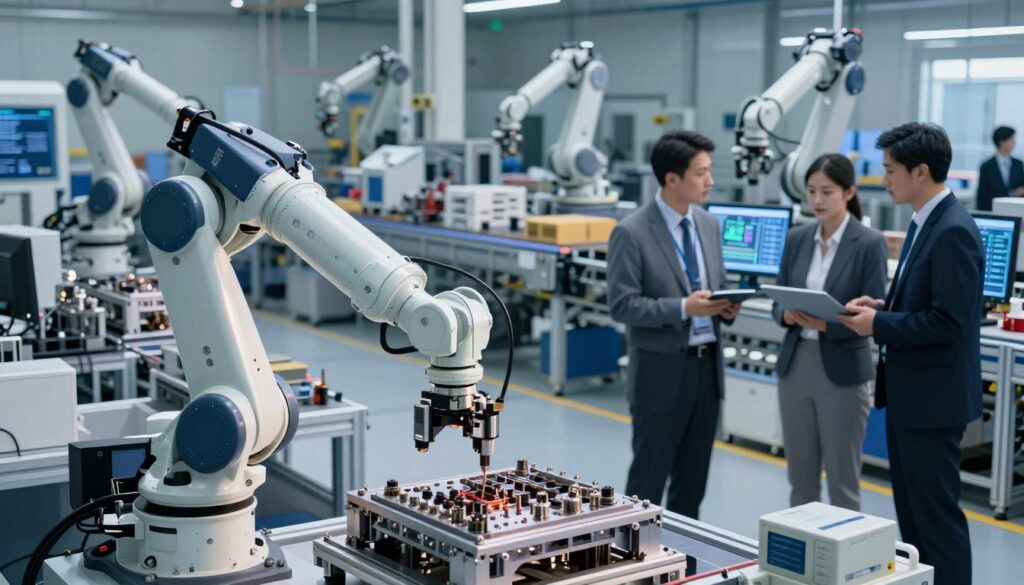
The job market is undergoing a period of profound and accelerated change. Technology is redefining daily tasks, but opening doors to new ways of creating value.
Professional adaptation has ceased to be a differentiator and has become a basic necessity. Those seeking stability should look at emerging sectors with curiosity and a willingness to learn.
Career reinvention is a continuous process that requires self-knowledge. Large companies value professionals who combine technical skills with emotional intelligence.