
Anúncios
Have you ever stopped to consider that the success of a flight depends on much more than just who is in the cockpit? Many people believe that working in this sector means only being a pilot or a flight attendant, but the reality is far more fascinating and diverse.
The aviation industry is a massive ecosystem that connects the world through technology, logistics, and strategic management, offering incredible opportunities for professionals from various backgrounds who wish to build a solid and dynamic career path.
Anúncios
Today, we will explore the different facets of this market to help you identify which area best aligns with your profile.
What to consider when choosing between different areas of the aviation industry
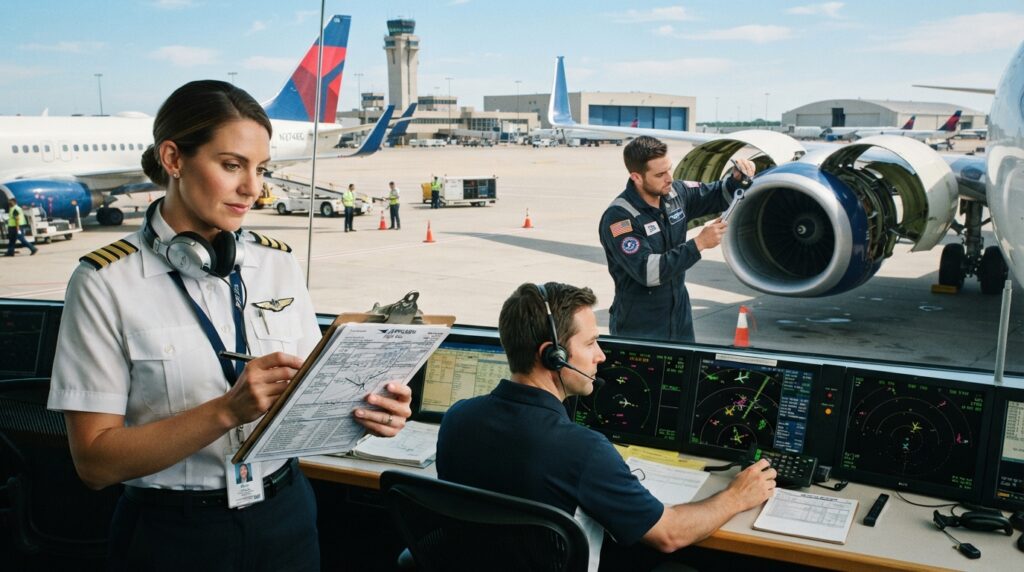
Choosing a career within the diverse fields of aviation requires deep reflection on who you are.
The aviation sector is vast, offering paths that cater to different profiles—from those who thrive on the dynamic pace of the airfield to those who prefer the strategic environment of an office.
Anúncios
Before making a decision, it is essential to evaluate how each role would fit into your daily life. The aviation job market is demanding, yet highly rewarding for those who align their personal expectations with operational realities.
Personal interests, daily routine, and lifestyle
Your lifestyle is a key factor in the long-term sustainability of your career. Some positions require constant travel, while others offer a more stable routine in a single location.
Consider what truly motivates you on a day-to-day basis. If you value predictability, certain administrative roles might be ideal; however, if you prefer the adrenaline of a constantly changing environment, ground or flight operations might be more appealing.
Balancing training, responsibility, and opportunities
Every role in aviation requires a specific level of technical preparation and certification. It is important to research the necessary coursework and determine whether the investment of time and money makes sense for your current situation.
The aviation job market values professionals who are committed to continuous learning. Consider the following points as you plan your career path:
- Level of academic or technical education required.
- Legal and safety responsibilities associated with the position.
- Opportunities for growth and career advancement.
- Requirement for proficiency in foreign languages.
Preference for practical, analytical, or relational activities
Identifying whether you prefer working with machines, data, or people helps narrow down your options. Practical-minded professionals often work directly in maintenance or operations, while those with an analytical profile excel in logistics and planning.
Relational roles, on the other hand, are perfect for individuals who find it easy to interact with the public and resolve conflicts. Understanding where your natural skills fit best helps prevent future frustration and increases your professional satisfaction.
The importance of shift availability and a dynamic environment
Aviation never stops, which means many roles require working in shifts—including weekends and holidays. Being willing to adapt your internal clock is essential for anyone looking to work on the front lines.
Furthermore, the environment is highly dynamic and demands resilience to handle unexpected events. If you feel comfortable in settings that require quick decision-making and total focus, you have a great chance of excelling in this sector.
Flight operations: the professionals who keep every journey on track
Have you ever wondered who is responsible for ensuring that every flight reaches its destination safely?
Flight operations involve a complex network of specialists working in coordination to turn a flight plan into a smooth journey.
Every detail—from takeoff to landing—relies on flawless communication between those in the cockpit and those monitoring the skies.
Pilots and co-pilots: decision-making and technical mastery
Pilots and co-pilots represent the front line of aviation safety; they are trained to manage complex systems and make split-second decisions.
Their technical mastery allows them to interpret flight data and respond promptly to any changes in weather conditions.
Flight dispatchers and journey planning
Even before an aircraft leaves the ground, the flight dispatcher is already at work. This professional acts as the architect of a flight route, calculating fuel consumption, weather conditions, and airspace restrictions.
The work of this specialist ensures that the pilot has all the information necessary for an efficient journey.
Air traffic controller and airspace coordination
An air traffic controller serves as an invisible guide, organizing the flow of aircraft in the skies and at airports.
Using radar and communication systems, they ensure that every flight maintains a safe distance from other aircraft. This coordination is vital for preventing congestion and ensuring the smooth flow of flight operations worldwide.
Essential skills for handling pressure and unforeseen events
Working in this field requires a balanced psychological profile and a high degree of resilience. Professionals must be able to manage unexpected situations while remaining calm and maintaining total focus on safety. Some fundamental competencies include:
- Ability to analyze situations quickly under stress.
- Clear and assertive communication in critical situations.
- Teamwork and multitasking coordination.
- Strict adherence to safety protocols.
Training, certifications, and continuous professional development
This career path requires a solid educational foundation and a commitment to ongoing learning. Every air traffic controller, flight dispatcher, or pilot must undergo rigorous training and obtain internationally recognized certifications.
Continuous professional development is essential to keep pace with technological innovations and the new safety standards that regularly emerge within the sector.

Maintenance and Engineering: The Precision That Underpins Safety
Engineering and maintenance form the backbone that ensures the reliability of any aircraft in the sky. This sector is responsible for transforming complex designs into safe machines capable of completing long journeys with total efficiency.
The work carried out in hangars demands a level of rigor rarely seen in other industrial sectors. Every bolt, sensor, or electronic component undergoes a monitored lifecycle to prevent failures during operation.
Aircraft Mechanics and Pre- and Post-Flight Inspections
The aircraft mechanic is the professional who maintains direct contact with the physical structure of the plane. Aircraft maintenance involves a rigorous routine of visual inspections and functional tests conducted before and after every flight.
These specialists check everything from tire wear to the integrity of the turbines, ensuring the equipment is prepared to withstand the harsh conditions of altitude and pressure.
Aeronautical Engineers: Design, Testing, and Improvements
Aeronautical engineering operates at a more strategic and analytical level, focusing on the development of new designs, stress testing, and the implementation of continuous improvements to existing models.
Engineers use advanced calculations to optimize performance and reduce fuel consumption. The goal is always to raise the standards of safety and sustainability for the fleet.
Avionics Technicians and Aircraft Electronic Systems
The avionics technician is the specialist responsible for the “brain” of the aircraft, managing navigation, communication, and flight control systems that rely on advanced digital technology.
Without these professionals, radar systems and instrument panels would lack the precision required to guide pilots. Their role is vital to the integration of mechanical hardware and onboard software.
Attention to detail, document discipline, and teamwork
Success in these areas depends on a culture of impeccable organization. Some of the essential competencies include:
- Rigorous documentation of every technical intervention performed.
- Clear communication between shift teams.
- Strict adherence to manuals and international standards.
- Cross-verification of critical tasks by two specialists.
How technology expands the scope of these professionals’ work
Modern technology has transformed the way these specialists work on a day-to-day basis. Remote diagnostic tools make it possible to identify faults even before they turn into actual problems.
Data analysis software helps predict when parts need to be replaced based on actual usage, making the maintenance process much smarter and less disruptive to company operations.
Conclusion

Choosing a career in aviation requires looking inward to understand which challenges ignite your enthusiasm.
Every role plays a vital part in keeping the system operating safely and efficiently. Professional success depends on your ability to align your personal values with the demands of a dynamic, globalized environment.
Investing in continuous education and language proficiency opens significant doors within the aviation job market. Dedication to your studies and the pursuit of practical experience transform an initial interest into a solid and rewarding career path.