Anúncios
In a rapidly changing global landscape, the pursuit of excellence demands more than just technical knowledge.
Many professionals feel the need to constantly reinvent themselves to keep up with the demands of modern organizations.
Anúncios
Here, we will explore effective strategies to boost your professional trajectory in a sustainable and conscious way, ensuring you are always one step ahead.
Skills that companies value most in employees

Have you ever stopped to think about why some people stand out so much in today’s job market? The answer usually doesn’t lie in just one type of knowledge, but in the ability to intelligently combine different skills.
To position yourself strategically, you need to understand that companies seek well-rounded individuals. An employee’s success depends on how they apply their technical knowledge in conjunction with their emotional intelligence.
Anúncios
The balance between hard skills and soft skills
Hard skills are the technical skills you learn through courses, degrees, and specific training—the necessary foundation for performing fundamental tasks in your role.
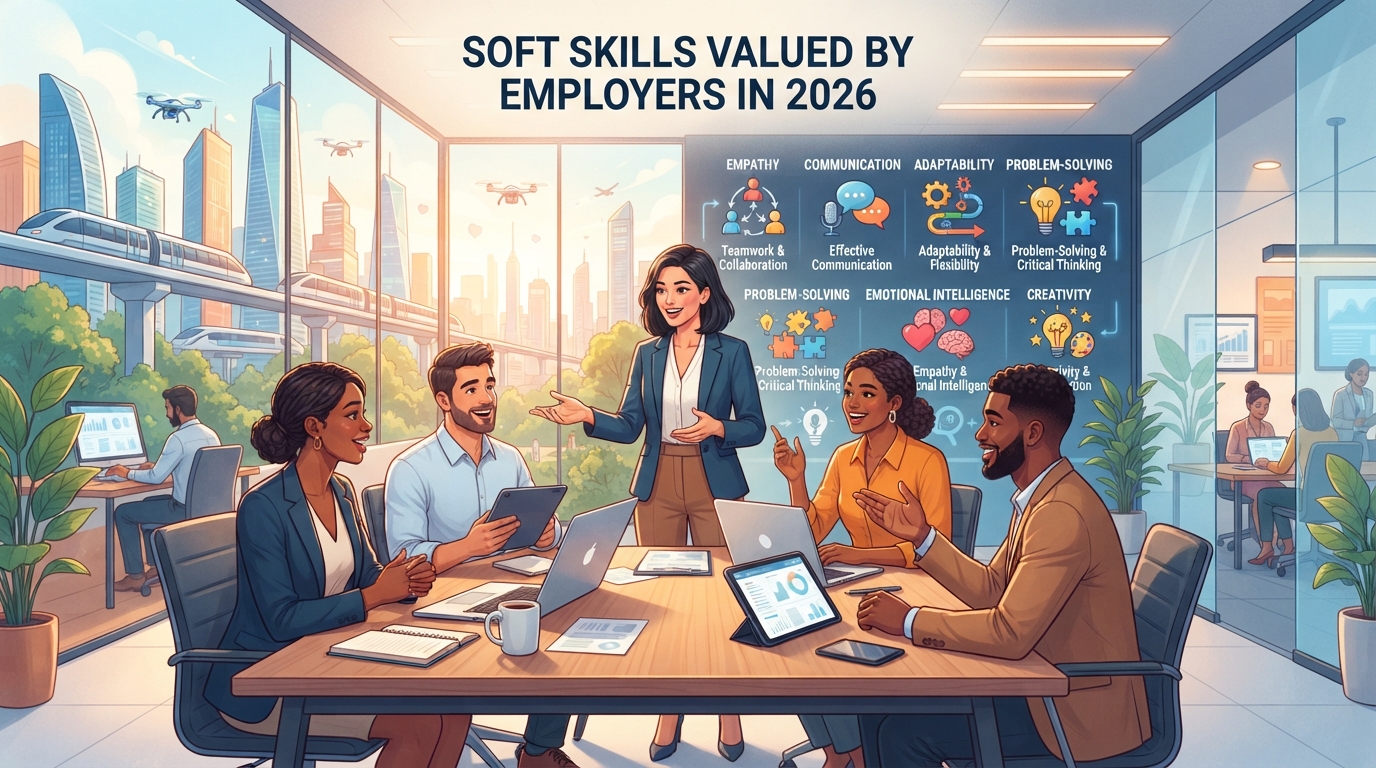
On the other hand, soft skills refer to your behavioral and interpersonal relationship skills, determining how you handle challenges, work in teams, and resolve conflicts on a daily basis.
To grow, you must seek a balance between these two pillars. Check out some essential skills that make up this valued profile below:
- Proficiency in digital tools specific to your field.
- Ability to communicate clearly and empathetically.
- Resilience in the face of unexpected changes.
- Analytical thinking for problem-solving.
How to Identify What Your Industry Really Seeks
Each area has specific requirements that change according to technological innovations and global trends.
Analyze job descriptions for positions you aspire to and observe which skills appear most frequently, helping to identify gaps in your resume and directing your learning efforts.
Remember that self-knowledge is the key to success. Therefore, realistically assess your own skills and always seek to evolve to become an indispensable professional for any organization.
Emotional Intelligence and Self-Management
Mental balance at work begins with deep self-knowledge and conscious management of emotions.
Emotional intelligence acts as the central pillar to ensure mental sustainability in any career. When we learn to identify our triggers, we can navigate complex challenges with much more clarity.
The Importance of Understanding Your Own Emotions
Recognizing what we feel is the first step to avoiding professional burnout. Often, we ignore warning signs until stress becomes unsustainable. By naming our emotions, we gain the power to choose how to react to difficult situations.
This constant practice of self-reflection allows you to stay focused even under pressure. Therefore, understanding your limits is one of the most valuable soft skills a professional can cultivate today.
Managing stress in high-pressure environments
Stress management requires practical strategies that can be applied daily. Small strategic breaks, for example, help restore the calm and perspective needed to solve problems.
Taking a deep breath and organizing priorities prevents anxiety from taking over your performance.
Maintaining a structured routine also helps reduce mental load. By adopting organizational techniques, you protect your health and ensure more assertive deliverables.
Tips for developing empathy at work
Empathy is one of the fundamental soft skills for anyone who wants to lead or collaborate effectively. To develop it, start by practicing active listening in all your conversations. Try to understand your colleague’s point of view before formulating your own response.
- Practice listening without interruptions.
- Validate the feelings of others with respect.
- Pay attention to body language during meetings.
- Demonstrate genuine interest in the well-being of the team.

Critical Thinking and Problem Solving
Mastering logical reasoning transforms obstacles into real opportunities for innovation.
Professionals who cultivate critical thinking can navigate complex scenarios with much more confidence and autonomy, which is fundamental for those who want to stand out in an increasingly dynamic market.
By adopting an analytical stance, you stop simply reacting to events and start anticipating solutions. Problem-solving thus becomes a structured and much more efficient process.
Going Beyond the Obvious in Data Analysis
Often, the first answer to a challenge is not the most accurate. Analyzing data requires you to question superficial information and look for hidden patterns that others may ignore.
It is vital to be aware of cognitive biases that can distort your judgment. By keeping an open mind, you avoid hasty conclusions and ensure that your decisions are based on concrete facts.
How to Make Assertive Decisions Under Uncertainty
Uncertainty is a constant in the modern corporate environment. Knowing how to act when you don’t have all the answers is what defines a high-level professional.
To make assertive decisions, evaluate the risks and benefits of each possible path. Confidence comes from the ability to weigh variables and remain calm under pressure.
Tools for structuring logical reasoning
There are practical methods that help organize your thoughts before acting. The use of mind maps, for example, allows you to visualize connections between different ideas clearly.
Another effective technique is root cause analysis, which helps identify the real origin of a conflict. By applying these tools, you improve your problem-solving and strengthen your critical thinking daily.
Adaptability and flexibility in the face of change
In a world where technologies emerge and disappear rapidly, adaptability is what separates the professionals who thrive from those who stagnate.
It’s not just about accepting change, but about anticipating it with an open mind. Those who develop this skill can transform uncertainties into opportunities for personal and professional growth.
The mindset of continuous learning
The concept of continuous learning is the fuel needed to maintain relevance over the years. Therefore, professionals who adopt this mindset understand that a degree is only the starting point, not the final destination.
To cultivate this habit, consider the following daily practices:
- Dedicate weekly time to studying trends in your industry.
- Seek out short courses to update your technical skills.
- Participate in knowledge-sharing communities.
- Be open to learning from colleagues of different generations.
How to Deal with Process and Technology Transitions
The transition to new tools or workflows often generates initial discomfort. However, stress management is fundamental to maintaining productivity during these transition periods.
When facing a technological change, try to focus on the long-term benefits instead of dwelling on the difficulty of the learning curve. Staying calm allows you to absorb new information with much more clarity and efficiency.
The Importance of Being Resilient in Times of Crisis
Resilience acts as a human shield that protects us during times of instability.
Being resilient doesn’t mean ignoring problems, but rather maintaining focus on key objectives even when the surrounding scenario seems chaotic, allowing you to navigate crises without losing your essence.
Remember that stress management is a daily exercise in self-awareness, essential for anyone who wants to maintain balance in any work environment.
Conclusion

Professional success requires a balanced mix of technical and human skills. Employees who seek constant growth find better opportunities in an increasingly demanding job market.
Career development depends on an active stance. Digital literacy and technological proficiency serve as the foundation for innovation in any sector, allowing you to transform ideas into real results.
Leadership and proactivity define who stands out from the competition. By taking control of your career path, you build a solid and lasting legacy.