
Anúncios
Have you ever stopped to wonder if your next great professional adventure might be hidden in distant fields? Many people dream of an international experience, yet few know where to begin looking for legitimate opportunities.
Working on farms abroad attracts Brazilians who are seeking new horizons and a unique, hands-on experience. However, this journey requires much more than just a desire to travel.
Anúncios
Here, we will demystify how rural work abroad actually functions.
What kind of profiles are farms looking for?
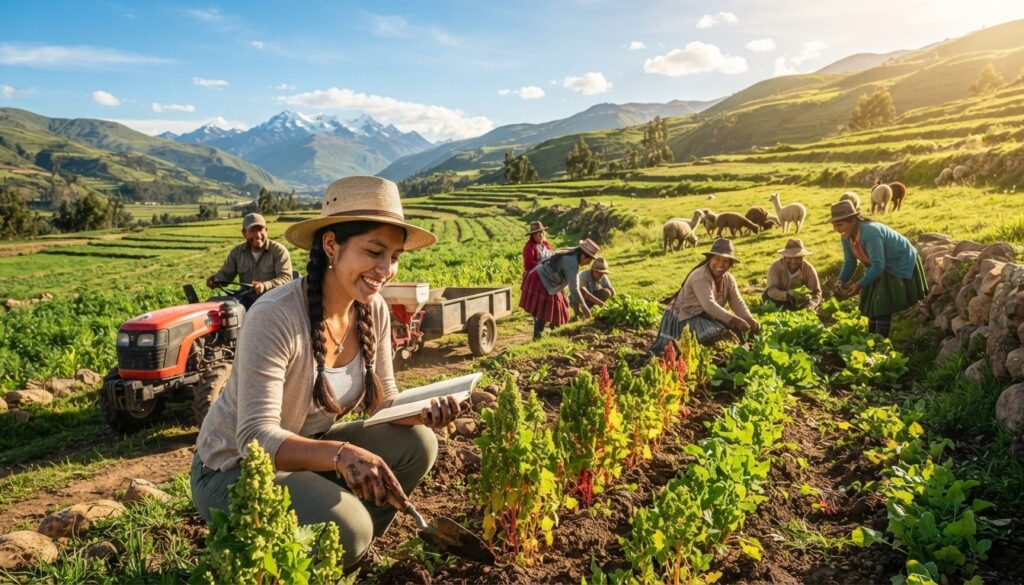
International recruitment for agricultural roles values both technical experience and a candidate’s overall attitude.
Managers look for individuals who understand the dynamics of rural operations and are prepared to face the daily challenges of agricultural production.
Anúncios
Practical experience valued by employers
A proven track record in rural activities serves as a significant competitive advantage. Employers seek candidates who are already familiar with tasks such as animal husbandry or the planting and harvesting cycle.
This prior experience reduces the need for extensive training and boosts team confidence. Rural workers who demonstrate mastery of fundamental tasks are typically prioritized in highly competitive selection processes.
Opportunities for beginners with no prior rural experience
If you lack experience, do not be discouraged; there are still opportunities for those eager to learn. Many agricultural operations value a willingness to grow and develop within the company.
For those just starting out, the key is to demonstrate a positive attitude and a strong commitment. Showing that you are hardworking can often compensate for a lack of an extensive background in the agricultural sector.
Essential physical, behavioral, and technical skills
Beyond technical knowledge, physical endurance is an essential requirement for day-to-day operations. Working in the field demands the ability to cope with changing weather conditions and potentially intense work schedules.
Punctuality and responsibility are indispensable behavioral traits for any international hire.
Being organized and capable of following instructions precisely makes working together in a professional environment much smoother.
When training in machinery operation and animal management makes a difference
Certificates from technical courses elevate your professional profile to a higher level.
Possessing the skills to operate modern agricultural machinery or having specialized knowledge in animal management are key assets that catch the attention of recruiters.
Such qualifications demonstrate that you have a solid theoretical foundation for handling expensive equipment and managing delicate processes. Investing in professional development is a smart strategy for those looking to stand out as skilled rural workers in the global market.
Requirements for applying for a rural job position
Success in securing a rural job abroad begins with meeting basic criteria and organizing your documentation. Paying close attention to detail ensures that you do not miss deadlines or valuable opportunities during the selection process.
Understanding the requirements for working abroad is essential for aligning your expectations with the reality of agricultural work. While each farm has its own specific demands, there are certain standards that apply to most international positions.
Age, health, and physical fitness
Most farms look for workers who are physically capable of handling daily tasks. The minimum age is generally 18, though some seasonal roles may have specific age ranges due to local labor regulations.
You must be in good health, as rural work requires constant effort and endurance. Employers often request medical certificates or questionnaires regarding your physical fitness to ensure you can handle the demanding daily routine.
Language skills for the workplace
Being proficient in the local language—or at least having a basic command of English—is a significant advantage that greatly facilitates your adaptation. You will need to understand safety instructions, communicate with supervisors, and interact with colleagues of various nationalities.
While full fluency is not required, the ability to communicate about basic tasks is essential for preventing accidents. Knowing how to ask for help or report a technical issue can be the deciding factor in your continued employment on the farm.
Personal documents and proof of experience
Gathering the necessary documentation for working abroad requires time and patience. Always have your valid passport, birth or marriage certificates, and—if required—translated criminal background checks on hand.
In addition to identification, provide proof of your previous experience through letters of recommendation and employment records. These documents validate your skills and increase an employer’s confidence in your professional profile.
How to organize certificates, professional references, and employment records
Create both a digital and a physical folder to centralize all your certificates and diplomas. Keeping everything organized makes it easier to quickly submit information when a job opening arises on short notice.
Reach out to former employers to request written references—ideally in English.
Also, keep records of any technical courses or agricultural training, as these demonstrate your commitment to continuous learning within the sector.
Where to find job opportunities on farms
The journey toward a career in agriculture abroad begins with choosing the right sources of information.
There are various digital and in-person avenues that connect Brazilian professionals with job openings on rural properties around the world.
Reliable platforms for international employment
The internet is the most accessible tool for locating agricultural opportunities abroad. Global job search websites allow you to filter vacancies by sector, country, and contract type, making it easier to connect with employers who are looking for foreign labor.
- LinkedIn: Ideal for networking and direct contact with farm managers.
- Indeed: Aggregates job postings from various portals in one place.
- AgriFoodJobs: Focused specifically on positions within the agricultural sector.
- Government portals: Many countries have official websites for seasonal workers.
Agencies specializing in rural recruitment
Hiring a rural recruitment agency can simplify the process, especially if you need assistance with documentation. However, it is essential to evaluate the company’s credibility before making any commitments.
Always check whether the agency has a verifiable track record and clear contact information. Be wary of promises of exorbitant earnings or recruitment fees that are not properly explained in a contract.
Websites of cooperatives, producers, and agricultural companies
Often, the best job openings are not found on major job portals, but rather directly on company websites. Large agricultural cooperatives and medium-sized producers frequently post job openings on their own institutional pages.
Following these companies on social media is also a smart strategy; they often announce harvest periods or team expansions, allowing you to submit your resume at the right time.
How to research a farm before submitting your documents
Before sharing your personal information, conduct thorough research on the workplace. Transparency is your best ally in avoiding unpleasant situations or scams.
- Confirm the farm’s location using satellite maps.
- Search for the company name in the business registries of the destination country.
- Check whether the farm’s website provides genuine contact information.
- Look for reviews from other workers on specialized forums.
How to Prepare a Resume for the Agricultural Sector
Your resume is your gateway to securing a position on farms abroad. To stand out in a competitive market, it is essential that your document be objective, well-organized, and convey professionalism from the very first glance.
When drafting an agricultural resume, keep in mind that recruiters are looking for clarity regarding your actual skill set. A well-structured presentation makes it easier for them to evaluate how your profile aligns with the specific needs of the farm or agricultural operation.
Essential Information for Your Resume
Start with your up-to-date contact information, including a professional email address and your phone number with the country code. A concise summary at the top of the page helps define who you are and what your primary objective is within the agricultural sector.
List your academic background and any relevant technical courses, even if they were short-term.
The section detailing your professional experience in agriculture should be organized chronologically, highlighting the positions you held and the names of the farms or companies where you worked.
How to Present Experience with Livestock, Crops, and Machinery
Be specific when describing your daily tasks. Instead of simply stating “worked with cattle,” specify whether you performed health management, vaccinations, feeding, or assisted with animal births.
When mentioning crops, indicate the types of plants grown and the tools or equipment you are proficient in using. If you have experience with machinery, list the specific models and any preventive maintenance tasks you have successfully carried out.
Whenever possible, quantify your achievements—such as meeting harvest targets or reducing waste—to demonstrate that you understand the importance of productivity in the field.
Adapting Your Resume to the Language and Standards of the Position
Tailor the vocabulary in your document to the official language of your destination country. Avoid literal translations, which may cause the technical meaning of your agricultural skills to be lost.
Research the resume format most commonly used in the region where you intend to work. Some countries prefer shorter, more direct formats, while others value a more detailed description of the skills acquired throughout one’s career.
Mistakes that may reduce your chances of being contacted by an employer
Avoid vague information that fails to demonstrate practical results. Excessive text can make a document tedious to read; instead, opt for short, direct bullet points.
Always include the start and end dates for each professional experience in the rural sector.
Furthermore, carefully proofread the document to ensure there are no typos or outdated contact information that might prevent an employer from reaching you.
Conclusion

Pursuing a new professional path requires courage and careful planning. Working on farms abroad can be a transformative journey for those looking to grow within the global agricultural sector.
Evaluate every offer by paying close attention to the details of the contract. Always verify the employer’s credibility, the living conditions provided, and the legality of the work visas.
Technical preparation and clear communication open valuable doors at large rural estates. Stay focused on reliable sources to find agricultural opportunities abroad that are both legitimate and secure.