
Anúncios
Have you ever stopped to consider whether your current job truly contributes to a better future, or if it simply keeps the system running as it always has? The search for a purpose that bridges one’s career with positive impact has never been more relevant than it is today.
Many professionals aspire to align their personal values with their daily work. Consequently, emerging roles centered on sustainability are transforming the global market and offering tangible paths for those who wish to innovate.
Anúncios
Below, we will explore how it is possible to grow professionally while helping to build smarter solutions for the planet.
How to choose a career aligned with sustainability

Choosing a sustainable profession is a process that aligns your personal values with global demands.
There is no single path; rather, it is a journey of discovery that connects what you love to do with what the world truly needs.
Anúncios
To begin, it is essential to look at the environmental and social challenges that resonate most deeply with you. When you identify with a cause, the motivation to learn and grow becomes much more natural.
Identify the problems that spark your interest.
The first step is to observe your surroundings and note which environmental or social issues capture your attention. This could be anything from plastic waste management and the pursuit of clean energy to the promotion of social equity within companies.
By focusing on a specific problem, you can direct your studies and efforts more efficiently. Ask yourself:
- Which topics make me want to research further?
- Which environmental impacts concern me the most?
- What kind of solution would I like to see implemented in my community?
Relate your current skills to market needs
You may already possess valuable competencies that can be adapted for the green sector.
Skills for sustainability are not limited to technical knowledge about the environment; they also involve the ability to solve complex problems.
Analyze how your previous experience can be applied in new contexts. For example, if you work in finance, you could specialize in impact investing or ESG reporting.
Consider these essential competencies:
- Ability to analyze data and metrics.
- Communication and people engagement skills.
- Critical thinking to identify waste.
- Project management with a focus on efficiency.
Consider the daily work routine, required education, and growth potential
When evaluating your options, it is important to be realistic about what the profession entails on a day-to-day basis. Some careers involve extensive fieldwork, while others focus on strategic consulting or academic research.
Check the educational background or training required to reach your goals. Often, short-term courses or specific certifications are enough to begin a career transition and develop the necessary sustainability-related skills.
Also, assess the growth potential of your chosen field. The market values professionals who can combine a sense of purpose with technical knowledge and practical results—a combination that ensures a solid, long-lasting career.
Rising professions in the field of sustainability
The global market is undergoing a profound transformation, in which environmental responsibility has shifted from being a mere competitive advantage to becoming a strategic necessity.
Discover the emerging, high-demand professions in sustainability that are reshaping the corporate world and opening up new career paths.
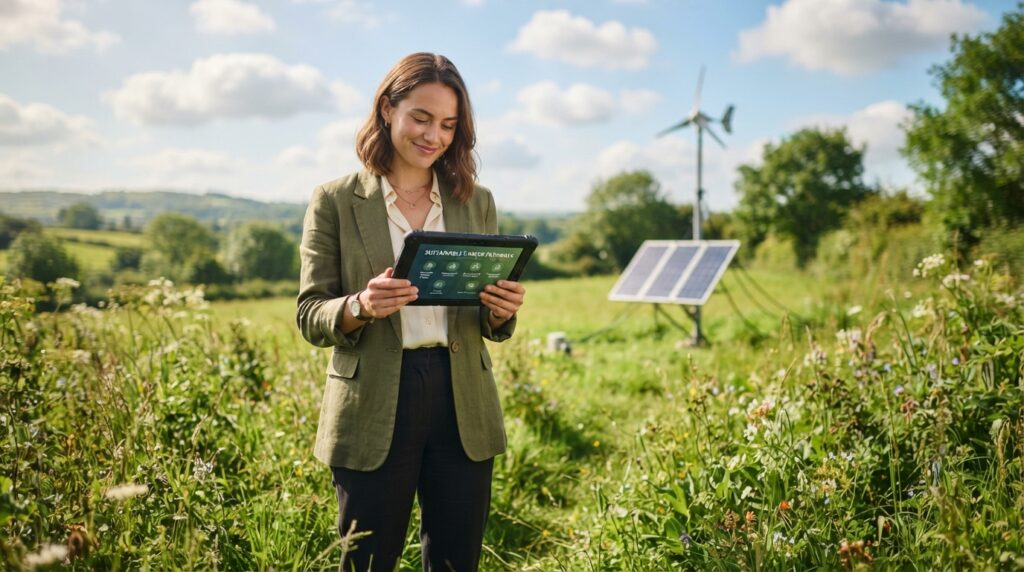
Sustainability Analyst
What this professional does on a daily basis
A sustainability analyst acts as a driver of internal change within organizations, monitoring processes, identifying areas for improvement, and ensuring that environmental goals are met on a day-to-day basis.
Skills most valued by companies
Companies look for professionals with an analytical mindset and strong communication skills; it is essential to be able to translate complex data into action plans that engage various departments.
Projects, indicators, and areas of operation
These professionals work with impact reports, carbon emission inventories, and environmental certifications, operating across diverse sectors—from the textile industry to the financial market.
Who this career is a good fit for
This is an excellent choice for those who enjoy organizing processes and have an aptitude for working with numbers. If you have an interest in management and want to see practical results in terms of environmental preservation, this field is ideal.
Waste Management and Circular Economy Specialist
How to reduce waste and transform materials into resources
A waste management specialist focuses on transforming what would otherwise be discarded into new inputs. The circular economy is the core pillar, aiming to keep the value of materials within the production cycle for as long as possible.
Activities in companies, industries, and consultancies
Activities include conducting waste disposal audits and implementing efficient selective collection (recycling) systems. Specialists also design workflows that allow industrial byproducts to become raw materials for other processes.
Knowledge of reverse logistics, repurposing, and recycling
Mastering reverse logistics is essential to ensure that products return to the manufacturer after use. Technical knowledge regarding different types of materials and recycling technologies serves as a competitive advantage.
The ideal professional profile for this field
This role is well-suited for creative, detail-oriented individuals who enjoy solving complex problems. It is a career for those who see value where others see only trash.
Renewable Energy and Energy Efficiency Consultant or Specialist
How this professional helps reduce consumption and emissions
This specialist focuses on optimizing the use of electrical and thermal resources. By reducing waste, they lower an organization’s carbon footprint and operational costs.
Projects involving solar energy, biomass, wind power, and other solutions
Projects may include the installation of solar panels, biomass systems, or the modernization of wind farms. Each solution is tailored to the specific needs of the individual client.
Technical skills, data analysis, and client relations
In addition to technical knowledge in engineering or physics, the role requires the ability to analyze consumption data. Strong client relations are vital for convincing leadership of the benefits of such investments.
Opportunities for professionals from diverse backgrounds
You do not need to be an engineer to work in this field; there are roles related to project management and technical sales. Professionals from various educational backgrounds can find opportunities by specializing in energy efficiency.
Skills that increase your chances of being hired
Have you ever stopped to consider which competencies truly open doors in the field of corporate sustainability? Today’s market values professionals who combine technical knowledge with a clear strategic vision.
Developing the right sustainability skills can be the differentiator that puts you ahead in competitive hiring processes.
Knowledge of environmental, social, and governance (ESG) indicators
Mastering ESG indicators is essential for any professional who wants to make a real impact, as it allows for the measurement of a company’s performance across pillars that are crucial to the future of business.
Understanding how these figures are calculated helps transform abstract goals into concrete action plans.
Data analysis and interpretation to support decision-making
The ability to analyze complex information is one of the most sought-after professional competencies today. It is not enough to simply collect data; you must be able to interpret it to inform strategic decisions.
When you can translate numbers into insights, you become an indispensable ally to leadership.
Clear communication with both technical and non-technical teams
Corporate sustainability requires you to navigate easily between different departments—explaining complex concepts to specialists while simultaneously translating them for areas like marketing or finance.
Effective communication ensures that everyone understands the importance of the proposed changes.
Systems thinking to perceive impacts beyond a single area
Systems thinking allows you to view an organization as a living, interconnected organism.
By understanding how a decision in one sector affects the whole, you avoid isolated solutions that fail to generate long-term value. This holistic perspective is essential for addressing complex, interdisciplinary challenges.
Organization, collaboration, and project management capabilities
Ultimately, execution is what separates good ideas from tangible results. Being organized and capable of leading projects allows you to manage timelines and resources efficiently. Therefore, working collaboratively is the key to engaging teams and achieving common goals in a sustainable way.
Now that you are familiar with these professional competencies, it is worth reflecting on which of them are already part of your daily routine. Identifying your strengths and areas that require development is the first step toward building a solid and relevant career.
Conclusion

As you explore emerging professions in the field of sustainability, you will realize that success depends on a combination of genuine interest, solid technical preparation, and a focus on measurable results.
Building a career in sustainability requires constant dedication. The path involves everything from pursuing specialized training and certifications to developing a portfolio that demonstrates your ability to solve real-world problems.
Transitioning into this field is a structured process. Start today by defining one priority skill to develop, or identify a small project where you can apply your knowledge.